
Your garage door is likely the largest and heaviest moving object in your home. It goes up and down thousands of times, protecting your vehicles and providing a convenient entry point. Yet, like any complex mechanical system, it requires regular care to function safely and efficiently.
Neglecting your garage door can lead to noisy operation, unexpected breakdowns, and expensive emergency repairs. Worse, a neglected door can become a safety hazard. The good news is that a little preventive maintenance goes a long way. This guide will walk you through the essential steps to inspect, lubricate, and test your overhead garage door system, ensuring it operates smoothly for years to come.

Why Your Garage Door Deserves a Little TLC
Think of your garage door like your car. You wouldn’t drive 50,000 miles without changing the oil or checking the tires. Your garage door system is a combination of electrical motors, high-tension springs, steel cables, and rolling hardware.
Benefits of a Maintenance Plan:
-
Safety: Identifying frayed cables or unbalanced springs before they snap protects your family and property.
-
Longevity: Regular lubrication reduces friction, which is the enemy of mechanical parts. A well-maintained door lasts years longer than a neglected one.
-
Cost Savings: Catching a small issue (like a loose bolt) now prevents a catastrophic failure (like a door coming off the tracks) later.
-
Quiet Operation: No one wants a door that screeches and rattles every time it opens.
Signs Your Garage Door Needs Attention
Before you even pick up a tool, listen and look. Your door will often tell you when it is unhappy.
-
Grinding or Squeaking: Metal-on-metal noises indicate a lack of lubrication or worn rollers.
-
Jerky Movement: If the door shudders or hesitates, the track may be dirty, or the springs may be losing tension.
-
Slow Response: If the opener struggles to lift the door, the balance is likely off.
-
Sagging: When the door is halfway open, does it look even? If one side is lower, the cables or springs are uneven.
Safety precautions
WARNING: While many maintenance tasks are DIY-friendly, some parts of your garage door system are under extreme tension and can cause severe injury or death if mishandled.
Door Spring, Components Under Tension:
The torsion springs (the coils above the door) and the lift cables attached to the bottom brackets do the heavy lifting. NEVER attempt to loosen, remove, or adjust these components yourself. If a spring is broken or a cable is frayed, call a professional immediately.
Disconnect Power:
Before working on the opener or the chain/belt, always unplug the unit from the ceiling outlet to prevent accidental activation.
Secure the Door:
If you need to work on the door while it is open, place a C-clamp or locking pliers on the track just below the rollers to prevent the door from falling if a spring fails.

Your Overhead Garage Door Preventive Maintenance Checklist
To keep your system in peak condition, break your maintenance down into manageable intervals.
Monthly Overhead Garage Door Preventive Maintenance
1. Visual Inspection:
Stand inside the garage with the door closed. Look over the garage door springs, cables, rollers, pulleys, and mounting hardware for signs of wear or damage. Is the mounting hardware tight? Are the cables frayed?
2. Test Safety Systems:
-
Photo-Eye Test: Close the door and wave a broomstick across the path of the infrared sensors near the floor. The door should immediately reverse.
-
Reversal Test: Place a 2×4 block of wood flat on the floor in the center of the door opening. Close the door. When it hits the wood, it should automatically reverse. If it doesn’t, the force settings need adjustment.
3. Door Operation Checklist:
Disconnect the opener by pulling the red emergency release cord. Lift the door manually. It should move smoothly with little resistance. If it is heavy, your springs are worn.
Quarterly Maintenance Tasks
1. Lubrication:
Friction is the enemy. Every three months, take 10 minutes to lubricate the moving parts.
-
What to use: A dedicated silicone-based garage door lubricant or white lithium grease. Do NOT use WD-40, as it is a degreaser and attracts dirt.
-
What to spray:
-
Springs: Coat the entire length of the torsion springs.
-
Rollers: Spray the ball bearings inside the rollers (if they are steel). Do not lubricate nylon rollers, only the steel stem.
-
Hinges: Spray the pivot points of the metal hinges.
-
Tracks: Do NOT lubricate the tracks. This causes rollers to slip instead of roll. Simply wipe them clean.
-
2. Inspect the Door:
Check the panels for rust or dents. If you have a wood door, check for water damage or peeling paint.
Annual Overhead Garage Door Preventive Maintenance
1. Clean the Garage Door Surface:
Wash the exterior of the door with a mild detergent and water to remove dirt, salt, and grime. This protects the finish and prevents rust.
2. Service the Chain or Belt:
Check the tension of the opener chain or belt. It should not be sagging excessively. If it is slapping against the rail, tighten it slightly according to your manual.
3. Service the Seals and Springs:
Check the weather stripping on the bottom and sides of the door. If it is brittle or cracked, replace it to keep out rain and pests. Re-check the balance of the door (the “Door Balance” test described below) to ensure springs haven’t lost tension over the year.
Detailed Maintenance Procedures
Examine Garage Door Hardware
The vibration of the door can loosen bolts over time.
-
Tighten: Use a socket wrench to tighten the lag screws connecting the tracks to the wall brackets. Tighten the bolts on the hinges and roller brackets.
-
Inspect Rollers: Look at the wheels. If they are wobbling or the bearings are exposed, replace them. Nylon rollers are quieter and last longer than steel.
Garage Door Opener Maintenance
-
Batteries: Change the batteries in your remote controls and the outdoor keypad.
-
Bulbs: Ensure the light bulbs in the opener unit are working. Use vibration-resistant bulbs or garage-door-specific LEDs to prevent interference with the remote signal.
-
Backup Battery: If your unit has a battery backup, unplug the opener and test if the battery can still lift the door. If not, replace it.
Adjustment and Replacement
If the door fails the safety reversal test, you may need to adjust the Force or Limit settings on the motor unit. Consult your owner’s manual. Usually, this involves turning small screws on the side of the unit to tell the motor how far to travel and how much force to apply.
When to Call the Professionals
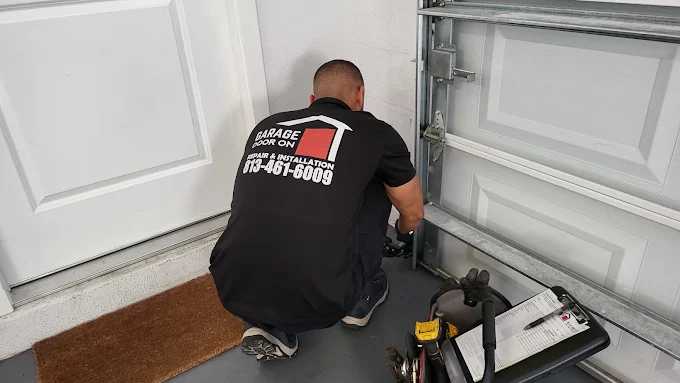
While the tasks above are great for DIY maintenance, there is a line you shouldn’t cross. You should call Garage Door On if:
-
The door is extremely heavy to lift manually.
-
The springs are broken (you see a gap in the coils).
-
The cables are snapped or dangling loose.
-
The door has come off the tracks.
-
You hear a loud “bang” or “pop” sound.
-
The opener motor hums but the chain doesn’t move.
Frequently Asked Questions about Garage Door Maintenance
Q: How often should I lube my garage door?
A: Ideally every 3 months, but at least twice a year (Spring and Fall).
Q: Can I use grease on the tracks?
A: No. Grease attracts dust and grit, creating a sticky paste that grinds down your rollers. Keep tracks clean and dry.
Q: Why does my door reverse when it hits the floor?
A: Your “Down Limit” is likely set too far. The opener is pushing the door into the concrete, thinking it hit an object, and reversing for safety. Adjust the limit switch on the motor.
Q: My door is noisy. Will lubrication fix it?
A: It often helps significantly. However, if the noise persists, it may be due to worn-out metal rollers or loose hardware that needs tightening.
At Garage Door On, we believe a well-maintained door is a safe door. By following this schedule, you protect your investment and ensure your garage door opens every time you press that button. If you are uncomfortable performing any of these tasks, or if you spot a problem, contact us today for a professional tune-up.
