
Living in Florida offers many perks, from stunning beaches to warm winters. However, residents are also all too familiar with the downside of the tropical climate: severe thunderstorms and the annual hurricane season. Power outages are a common occurrence, and they often happen at the most inconvenient times.
For many homeowners, the garage door is the primary entrance to the home. When the power grid fails, an automatic garage door opener becomes a dead weight, potentially trapping your vehicle inside or locking you out during a storm. This is where a backup battery for garage door opener becomes an essential piece of home safety equipment. It ensures that your daily routine—and your safety—are not interrupted just because the electricity is down.
What Is a Battery Backup?
A battery backup is a small, 12-volt rechargeable battery unit that is integrated into your garage door opener system. Under normal conditions, when your home has power, the battery sits in standby mode, trickle-charging to ensure it is always at full capacity.
The moment your home loses electricity, the system automatically switches to the backup battery. There are no switches to flip or cords to plug in; the transition is seamless. When running on battery power, the opener will typically operate at a slightly slower speed to conserve energy, and non-essential features like the overhead light bulbs may be disabled. However, the safety sensors and the remote controls will continue to function normally.
A fully charged battery is generally designed to supply the opener with 24 hours of standby power. During this period, it can typically operate the door for up to 20 full cycles (opening and closing), allowing you ample opportunity to get your car in and out until the utility power is restored.

Why Is a Battery Backup Important?
While it may seem like a luxury, a battery backup is a critical safety feature. In fact, in some states prone to natural disasters, laws have been passed requiring all new garage door openers to include this technology. Here is why it is so vital for Florida homeowners:
1. Emergency Egress
During a severe weather event or a fire, you may need to evacuate your home quickly. If the power is out, manually lifting a garage door can be difficult, especially for the elderly, those with physical limitations, or if the door is a heavy, hurricane-rated model. A battery backup ensures you can open the door with the push of a button to evacuate safely.
2. Security
Without a battery, the only way to open the door is to use the emergency manual release cord. Once this cord is pulled, the door is disconnected from the motor and can be lifted by hand from the outside (if the lock is not engaged). This can leave your home vulnerable if you forget to re-engage the latch. A battery backup keeps the door connected to the automatic opener, maintaining the lock mechanism and keeping intruders out.
3. Convenience
There is nothing worse than arriving home during a thunderstorm only to realize the power is out. Without a backup battery, you would have to park outside, run through the rain, enter the house through a different door, go into the dark garage, and pull the release cord to let your car in. With a battery, you simply click your remote and drive in, staying dry and safe.
How to Install a Built-in Battery
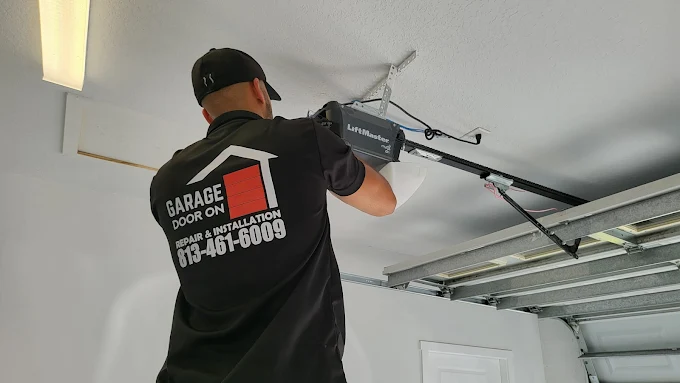
Many modern openers, such as the LiftMaster 8550W and comparable models from other brands, come designed with a dedicated slot for a backup battery. If your unit is “battery backup capable” but did not come with one, or if you need to replace an old battery, the process is usually straightforward.
-
Safety First: Unplug the garage door opener from the ceiling outlet to prevent electrical shock.
-
Access the Compartment: Locate the battery compartment on the motor housing. This is often on the side of the unit or behind the light lens cover. You may need a screwdriver to open the door.
-
Connect the Terminals: Take the new battery and identify the red (positive) and black (negative) terminals. Connect the corresponding wires from the motor unit to the battery terminals.
-
Insert the Battery: Slide the battery into the slot. It should fit snugly.
-
Close and Power Up: Replace the compartment cover and plug the opener back into the outlet. The battery status LED will likely flash orange or green as it begins to charge. It typically takes about 4.5 hours to reach a full charge.
How to Install an Add-on Battery
If you have an older garage door opener that was not designed with an internal battery slot, you may still be able to add this functionality, though it is slightly more complex. Some manufacturers sell external battery backup kits that mount to the ceiling next to the motor.
-
Verify Compatibility: Not all motors are compatible with external battery packs. Check your owner’s manual or consult with a professional to ensure your logic board can accept the upgrade.
-
Mount the Unit: Secure the external battery box to the angle iron supports on your ceiling, keeping it close to the main motor unit.
-
Connect the Wiring: This step often involves plugging a specialized harness into the back of the motor unit. Ensure the wires are secured away from moving parts like the belt or chain.
-
Test the System: Once installed and charged, unplug the main power cord to simulate an outage and test if the door opens via the remote.
Because adding an external unit can involve working with electrical components and mounting hardware, many homeowners prefer to have this service performed by a professional technician to ensure reliability.
Monitoring Your Battery Health
Like the battery in your car, a garage door backup battery does not last forever. It typically has a lifespan of 1 to 2 years, depending on the temperature and usage.
Your opener is designed to tell you when the battery needs attention.
-
Audible Alert: The most common sign is a beep that sounds every 30 seconds. This indicates the battery is no longer holding a charge and needs replacement.
-
Visual Indicator: Look for a battery status LED on the motor. A solid orange light indicates the door is running on battery power. A solid red light usually means the battery is dead or missing.
Recycling is important. These are lead-acid batteries, similar to car batteries, and should not be thrown in the trash. When you replace them, please recycle the old unit properly.
At Garage Door On, we understand that reliable access to your home is non-negotiable. Whether you need to replace a dying backup battery or want to upgrade your existing opener to a modern, storm-ready model with built-in power redundancy, our team is here to help. Contact us today to ensure your garage door opens every time, rain or shine.