
For many homeowners, the garage is simply a place to park cars or store holiday decorations. However, with a little creativity and planning, this underutilized space can be transformed into a lush, productive sanctuary. A garage garden offers a unique opportunity to grow fresh produce, herbs, and flowers year-round, protected from the harsh elements and unpredictable weather.
Whether you are looking to start a hobby, improve your food sustainability, or simply beautify a utilitarian space, converting a portion of your garage into a garden is a rewarding project. This comprehensive guide will walk you through the essentials of setting up, maintaining, and maximizing a thriving garden right inside your garage.
Why Grow Plants Inside Your Garage?
There are several compelling reasons to move your gardening efforts indoors. First and foremost is climate control. Unlike an outdoor garden, a garage garden is not subject to unexpected frosts, scorching heatwaves, or heavy storms that can decimate a crop in hours. You have the ability to create a stable microclimate that is perfect for the specific plants you wish to grow.
Additionally, a garage environment offers better pest management. While not entirely immune to bugs, an enclosed space is far easier to protect from deer, rabbits, and massive insect infestations compared to an open backyard. Furthermore, accessibility is a major benefit. Having your garden just a few steps away from your kitchen makes harvesting herbs for dinner or tending to plants on a rainy day much more convenient.

Things to Consider with a Garage Garden
Before you buy your first bag of soil, you must assess the environment. Garages are typically designed for vehicles, not vegetation, so there are specific challenges to address. The primary consideration is space. You need to determine if you will still park cars in the garage or if the garden will take over a dedicated corner or the entire area.
Cleanliness is another factor. Garages often house chemicals, gasoline, and exhaust fumes. It is vital to ensure that your gardening area is well-ventilated and separated from any hazardous materials to prevent contamination of edible plants. Finally, consider the flooring. You will be dealing with water and dirt, so having a concrete floor that is sealed or using protective mats is essential to prevent damage and slips.
Can You Get Adequate Natural Lighting in a Garage Garden?
Most residential garages are not built with ample windows. Even if you have windows, they are often small, high up, or facing a direction that does not provide the intense, direct sunlight required for fruiting vegetables like tomatoes or peppers. Opening the garage door to let light in is an option, but it invites pests and fluctuates the temperature too drastically.
Therefore, relying solely on natural light is rarely sufficient for a productive garage garden. While low-light houseplants might survive near a window, a vegetable garden will almost certainly struggle without supplementation.
What About Artificial Lighting?
Because natural light is scarce, artificial lighting is the backbone of a successful garage garden. You cannot simply use standard incandescent bulbs; plants require specific spectrums of light to photosynthesize effectively.
LED Grow Lights: These are the gold standard for modern indoor gardening. They are energy-efficient, produce very little heat (which helps manage the garage temperature), and provide the full spectrum of light plants need.
Fluorescent Lights (T5): These are a cheaper alternative and work well for seedlings, leafy greens, and herbs. However, they may not be powerful enough for flowering or fruiting plants.
HID Lights: High-Intensity Discharge lights are powerful but generate significant heat and consume more electricity. They are generally reserved for large-scale operations.
How to Make a Beautiful Garage Garden
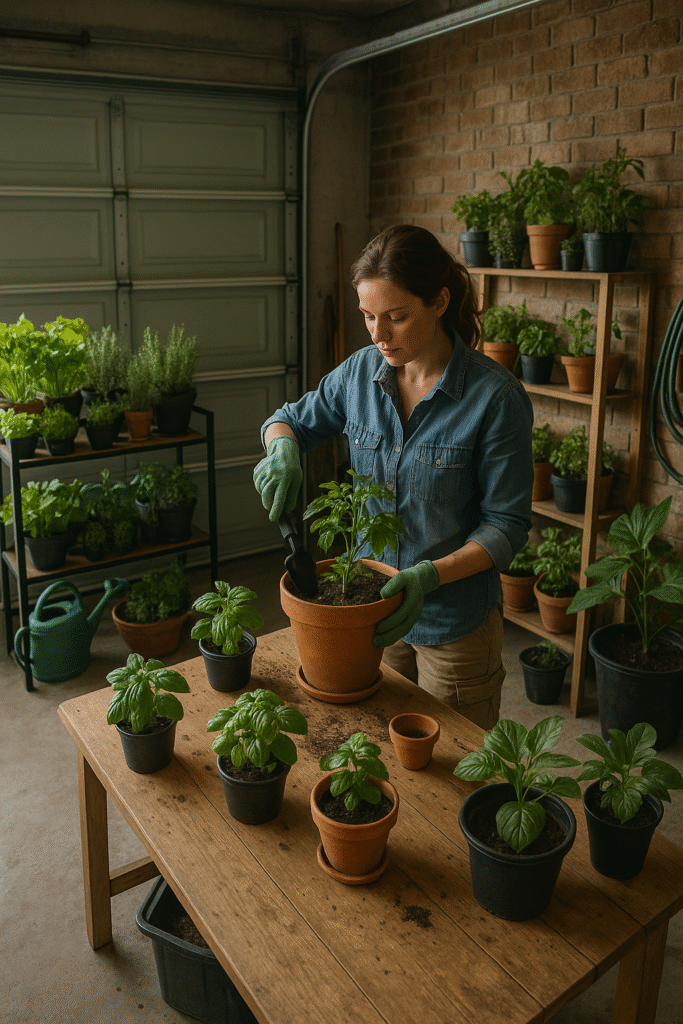
A garage garden doesn’t have to look like a science experiment. You can design it to be an aesthetically pleasing extension of your home. Start by painting the walls a bright white. This not only makes the space look cleaner and more inviting but also reflects light back onto the plants, increasing efficiency.
Use uniform containers or decorative pots rather than mismatched plastic tubs. Incorporating wooden shelving units or industrial-style metal racks can give the space a structured, organized look. Keep the floor clean and consider adding an indoor-outdoor rug in the walkway areas to soften the industrial feel of the concrete.
Tips for Cold-Weather Garage Gardening
If you live in a region with cold winters, or even if you just experience occasional cold snaps, the temperature in an uninsulated garage can drop dangerously low. To keep your plants alive, you need to manage the cold.
First, ensure your garage door is insulated. A high-quality, insulated garage door acts as a thermal barrier, keeping the garage significantly warmer than the outside air. You can also use heat mats under seedling trays to keep the root zone warm. For larger setups, a small, oil-filled space heater with a thermostat can maintain the ambient temperature above freezing without drying out the air too aggressively.
Creating a Greenhouse Effect
To mimic the conditions of a greenhouse, you need to manage humidity and temperature. Grouping plants together naturally raises the humidity in their immediate vicinity as they transpire.
You can also create mini-greenhouses within the garage using clear plastic tenting or grow tents. These enclosed spaces trap heat and moisture, creating a tropical microclimate perfect for peppers, tomatoes, and tropical plants. However, be careful not to let the humidity get too high, as this can encourage mold growth.
Stabilizing the Temperature in Your Garage Garden
Temperature fluctuations are the enemy of plant growth. Garages often swing from hot during the day to cold at night. Insulation is your best defense. Beyond the garage door, consider insulating the walls and ceiling if they aren’t already.
Thermal mass can also help. Large barrels of water stored in the garage absorb heat during the day and release it slowly at night, helping to smooth out temperature spikes and dips. Additionally, keep your plants off the cold concrete floor by placing them on raised tables, shelves, or pallets.
What About Hydroponic Gardening?
For a garage setting, hydroponics is often cleaner and more efficient than soil-based gardening. Hydroponics involves growing plants in a nutrient-rich water solution rather than soil.
Because there is no soil, you eliminate the risk of soil-borne diseases and pests. Hydroponic systems also grow plants faster and can be stacked vertically, making them ideal for the limited footprint of a garage garden. While the initial setup can be more technical, the long-term maintenance is often easier than hauling bags of dirt.
Materials Needed for a Garage Garden
To get started, you will need a specific set of tools and materials tailored to the indoor environment:
-
Grow Lights: LED or fluorescent fixtures with timers.
-
Shelving: Heavy-duty metal or plastic racks.
-
Containers: Pots with drainage saucers or hydroponic reservoirs.
-
Growing Medium: Potting mix, coconut coir, or clay pebbles (for hydroponics).
-
Fans: Oscillating fans to promote air circulation.
-
Thermometer/Hygrometer: To monitor temperature and humidity.
-
Watering Can or Hose Attachment: Ideally a sink connection if available.
How to Make Your Own Garage Garden
Building your garden is a step-by-step process. Rushing into planting without preparation usually leads to failure.
1. Clean and Prepare Your Garage
Remove clutter and sweep the area thoroughly. If the floor is stained with oil or chemicals, clean it with a heavy-duty degreaser. Ensure you have clear access to electrical outlets.
2. Install Grow Lights
Mount your lights to the ceiling or the underside of your shelving units. Ensure they are adjustable so you can raise them as the plants grow.
3. Set Up Shelving or Tables
Position your racks or tables. Place them near power sources but away from drafty doors or windows. If using a vertical setup, ensure the shelving is sturdy enough to hold the weight of wet soil.
4. Choose Your Growing Medium
Decide between soil and hydroponics. If using soil, buy a high-quality, sterile potting mix meant for indoor use. Garden soil is too heavy and often contains bugs.
5. Install Ventilation
Stagnant air leads to mold and weak stems. Set up oscillating fans to keep a gentle breeze moving over the plants. This strengthens the plants and prevents fungal issues.
6. Set Up Watering System
Determine how you will water. If you don’t have a sink in the garage, you might need large water containers. For larger gardens, a drip irrigation system connected to a timer can save a massive amount of daily labor.
What Plants Can You Grow in the Garage?
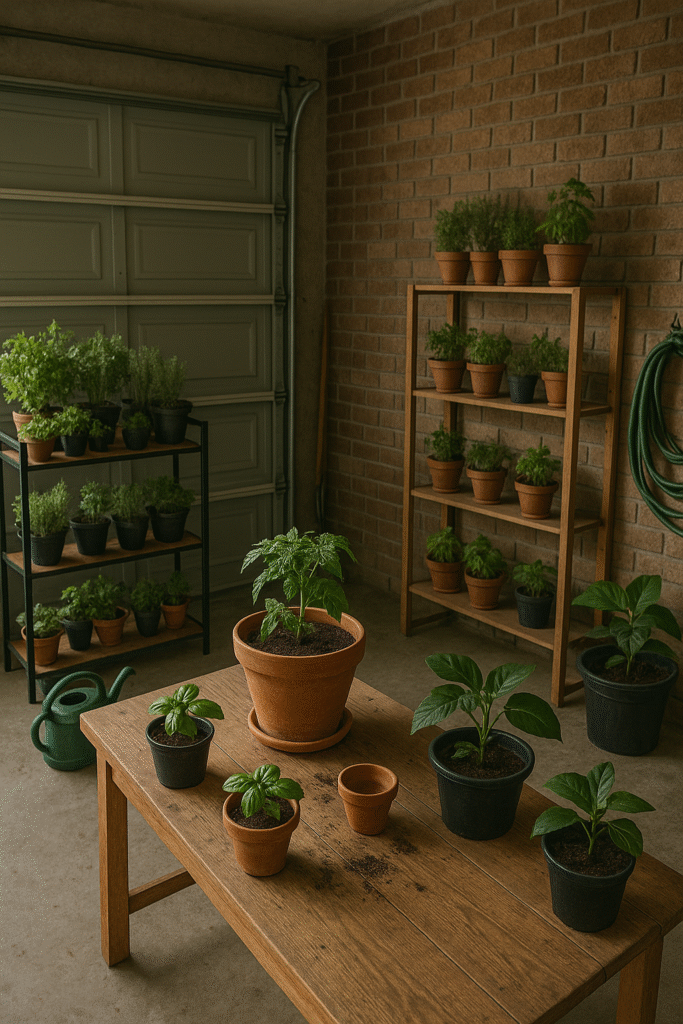
While you can technically grow almost anything with enough light, some plants are better suited for garage gardening than others.
Leafy Greens: Lettuce, spinach, kale, and swiss chard are excellent choices. They tolerate lower light levels and cooler temperatures.
Herbs: Basil, cilantro, parsley, mint, and chives thrive indoors and don’t require massive amounts of space.
Microgreens: These are the fastest and easiest crop, ready to harvest in just a few weeks.
Root Vegetables: Radishes and carrots can be grown in deep containers.
Fruiting Plants: Tomatoes, peppers, and beans can be grown but require high-intensity lighting and warmer temperatures.
Best Plants for Garage Gardening
If you are a beginner, start with lettuce and herbs. They have a high success rate and a short growth cycle, giving you a quick reward for your efforts. “Cut-and-come-again” varieties of lettuce allow you to harvest leaves continuously for weeks. Cherry tomatoes are the best choice if you want fruit, as they require slightly less energy than large beefsteak varieties.
6 Tips for Maximizing Your Garage Garden
-
Go Vertical: Use the height of your garage. Stack shelves or use hanging planters to double or triple your growing area.
-
Use Reflective Material: Line your walls or the sides of your shelving with Mylar or white plastic to reflect light back onto the plants, ensuring the lower leaves get energy.
-
Rotate Your Plants: Even with overhead lights, the edges of the garden might be dimmer. Rotate plants weekly to ensure even growth.
-
Automate: Use smart plugs for your lights and fans. Consistency is key, and automation removes human error.
-
Monitor pH: If using hydroponics, check your water pH daily. Even in soil, checking the pH ensures nutrients are available to the plants.
-
Insulate the Garage Door: We cannot stress this enough. A well-sealed and insulated garage door is the single biggest factor in maintaining a stable climate for your plants.
Frequently Asked Questions About Garage Gardens
How often do I need to water my garage garden?
Indoor environments can be drier than outdoors due to fans and heaters. Check your soil daily. If the top inch is dry, it’s time to water. Hydroponic systems need water top-ups every few days.
Do I need to pollinate my plants?
Leafy greens and root veggies do not need pollination. However, fruiting plants like tomatoes and peppers usually rely on wind or bees. Inside a garage, you will need to gently shake the plants or use a small paintbrush to hand-pollinate the flowers.
Is it safe to use fertilizers in the garage?
Yes, but opt for organic, odor-free liquid fertilizers. Fish emulsion works well but smells terrible in an enclosed space; stick to compost teas or synthetic hydroponic nutrients for a cleaner experience.
Can pests still get in?
Yes. Spiders mites, aphids, and fungus gnats can find their way in. Inspect your plants regularly. If you find pests, use organic insecticidal soap or neem oil immediately to catch the infestation early.
